The Weekender Timber Framing Tool Kit is a beginner kit with the bare minimum to lay out and cut real mortise and tenon joinery: eight hand tools and three carpenter pencils, chosen for a small weekend project like a sawhorse or a mailbox post, without a major tool investment. It comes in two versions, set by the combination square: clamp lock or magnetic lock.
You save over $45 with this kit as opposed to buying the tools individually.
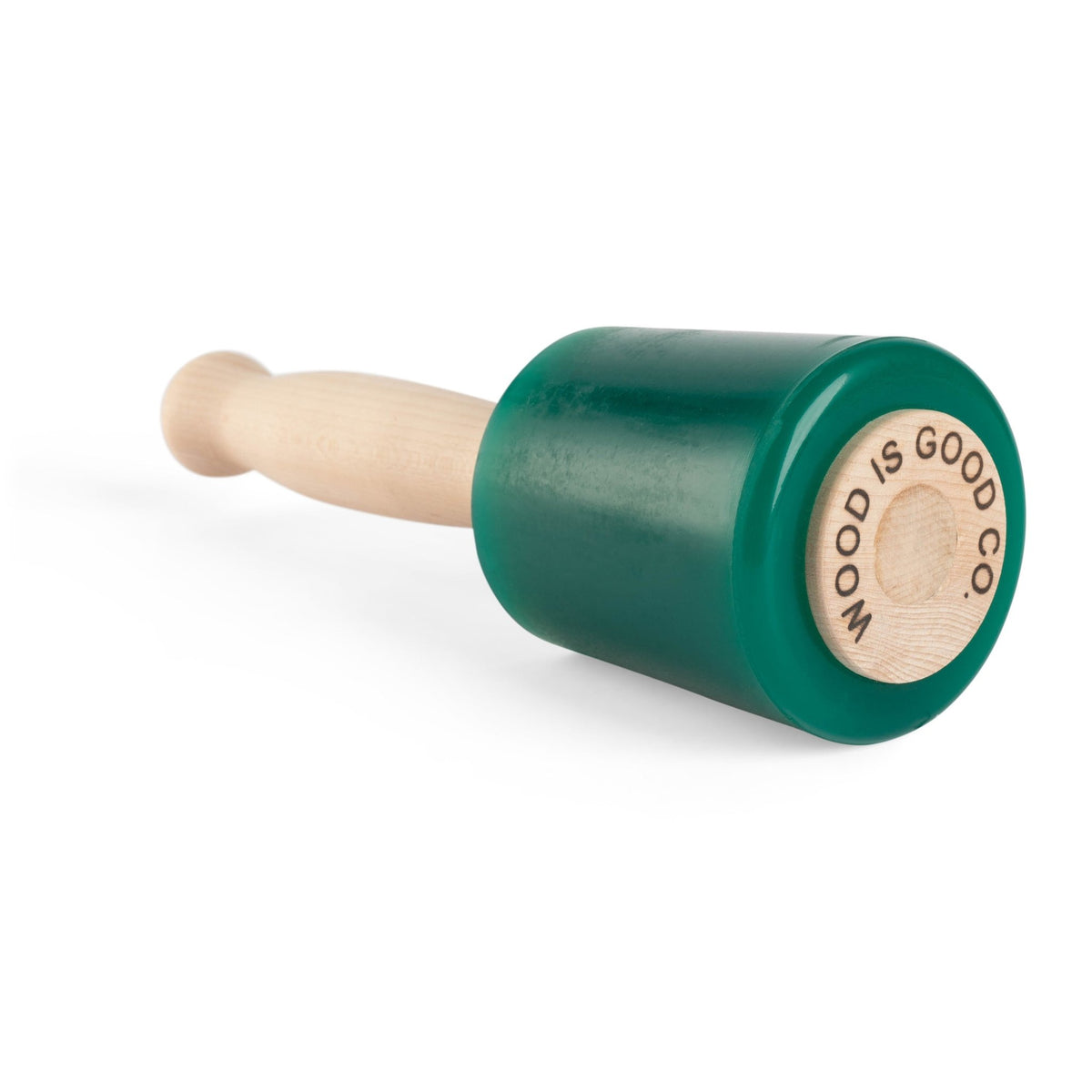
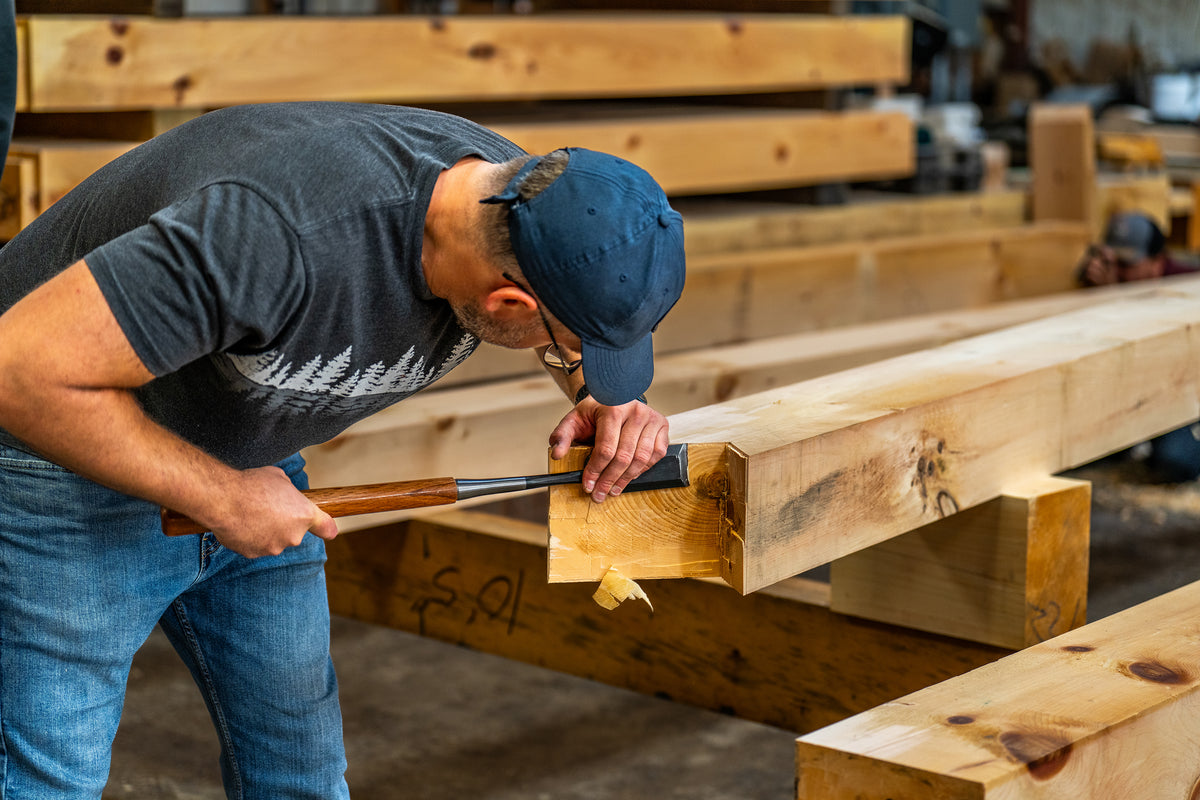
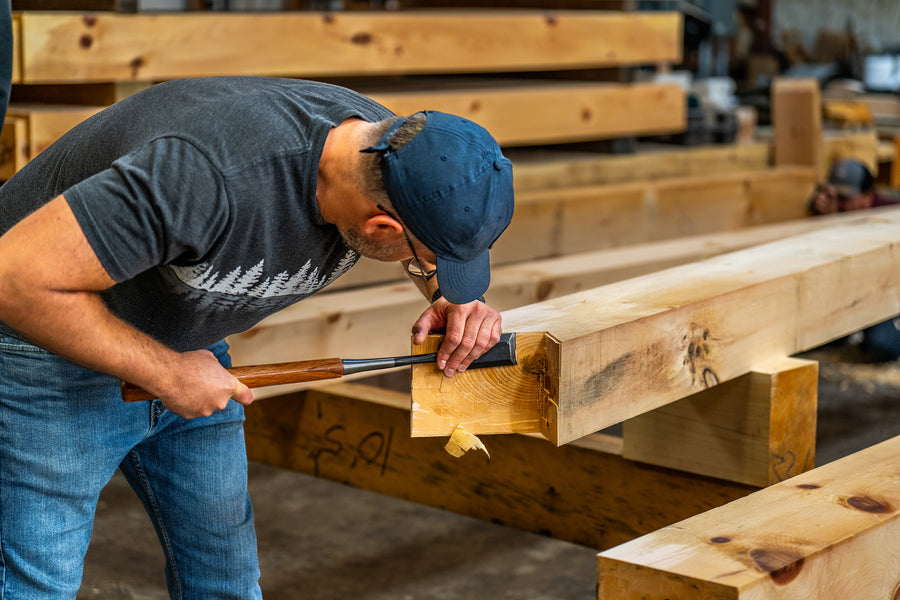
The Wood Owl Tri-Cut Auger Bit (18 x 3/4 in) bores the mortise, and the MHG Carpenter Chisel (35 mm) and Wood Is Good Mallet (20 oz) cut it clean. The MHG is made in Germany to the DIN 5141 standard and hardened to 61 HRC, and the mallet's urethane head absorbs shock and will not split a chisel handle. The Z-Saw Universal Kataba Saw (300 mm) cuts the tenon. It is a Japanese pull saw with no back spine, so it cuts to any depth, and its teeth handle rip, crosscut and angled cuts.
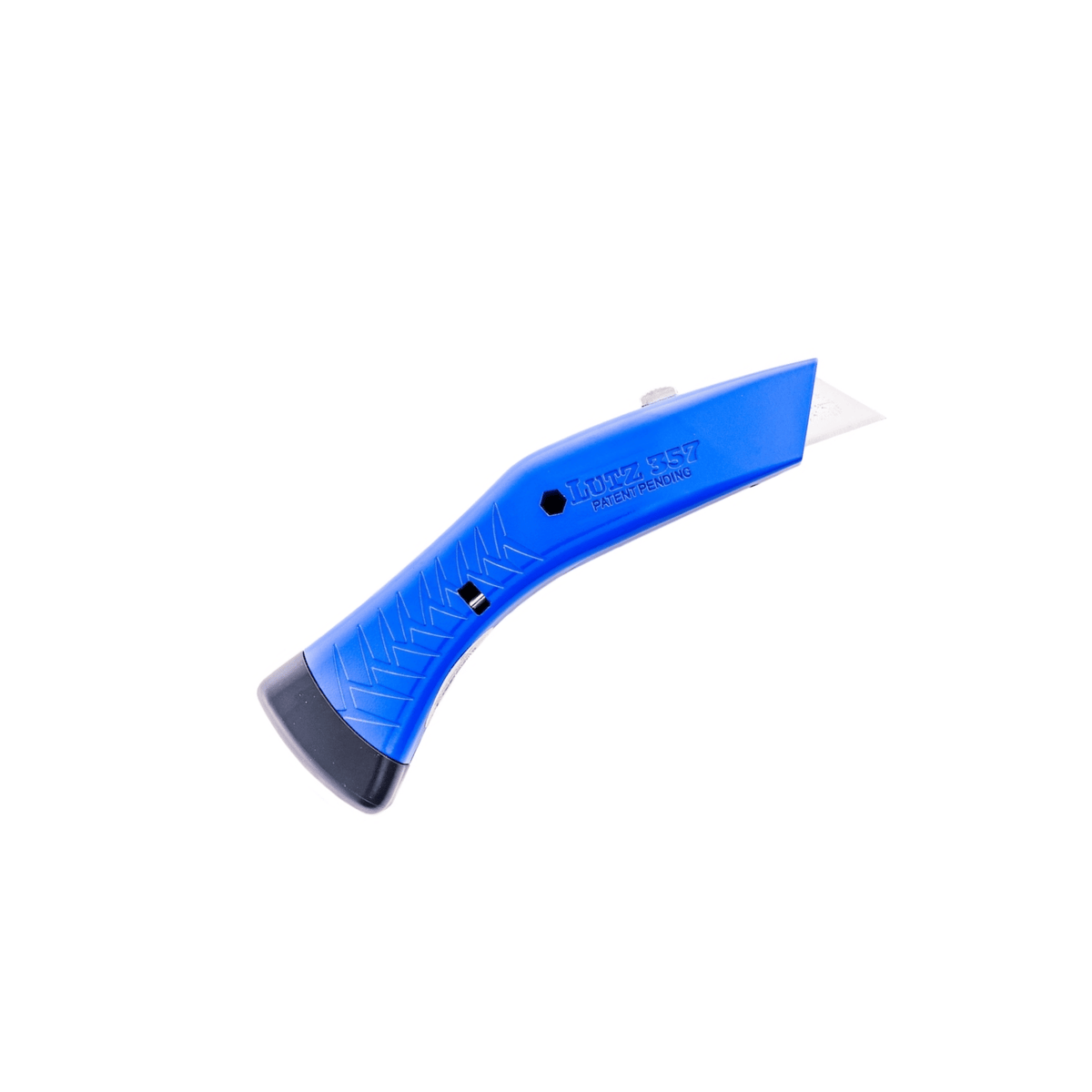
The Stanley 45-011 Premium Aluminum Rafter Square (24 x 16 in) lays out the joints. It is made in the USA from extra-thick aircraft-grade aluminum, anodized black, with embossed graduations painted yellow so they read in most light, and it carries the rafter table, brace measure, octagon scale and board measure. The Kapro Combination Square (12 in) checks square and sets depths. The clamp lock version (Kapro 352) locks the blade with a traditional clamp, and the magnetic lock version (Kapro 325) holds it with magnets so it stays where you set it. A Shelter Tools Lutz Tape Measure (25 ft), a Lutz 357 Utility Knife for scoring lines, and three red Shelter Institute carpenter pencils finish the kit. You will need a drill, or a hand brace with an adapter, to drive the auger bit's 7/16 in hex shank.
It pairs with our Timber Frame Sawhorse Online Course and Timber Frame Mailbox Post Online Course. If you are headed into the full Purely Post & Beam Online Course, step up to the Starter Timber Framing Tool Kit or above.
Pat and Patsy Hennin founded Shelter Institute in Bath, Maine in 1974 to teach people to build their own homes. They built their early frames outside on their farm, and Pat recalls that their most important tool was the framing square: they used it to scrape the ice off the beams.