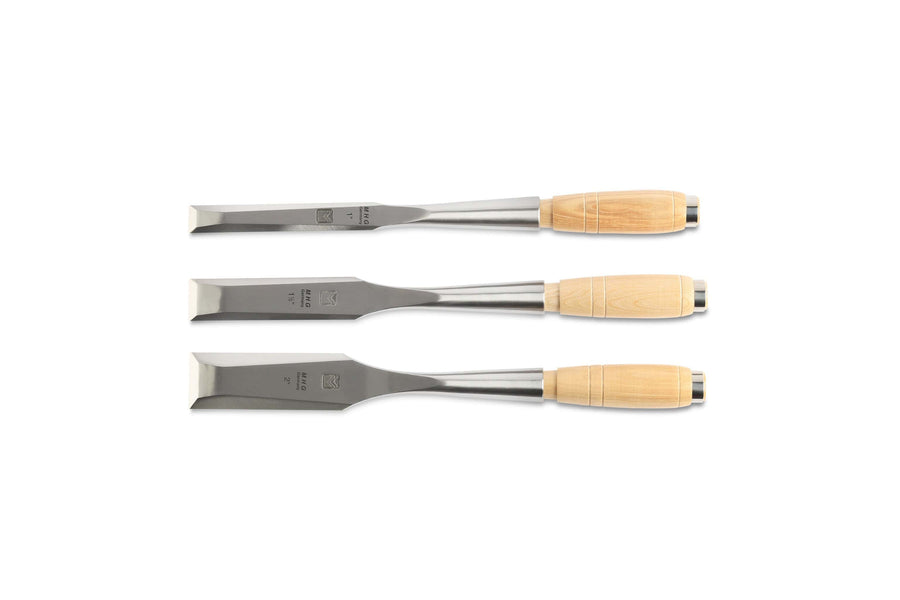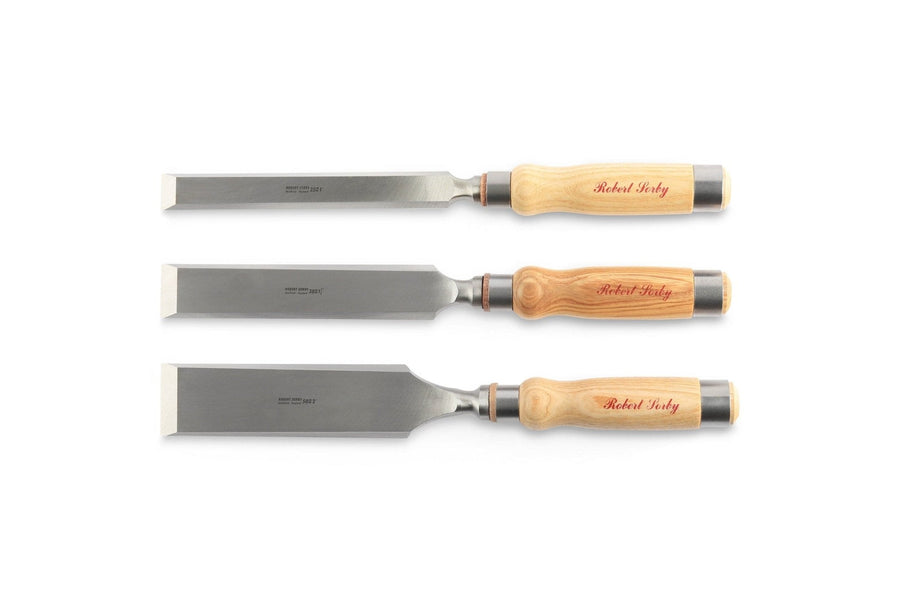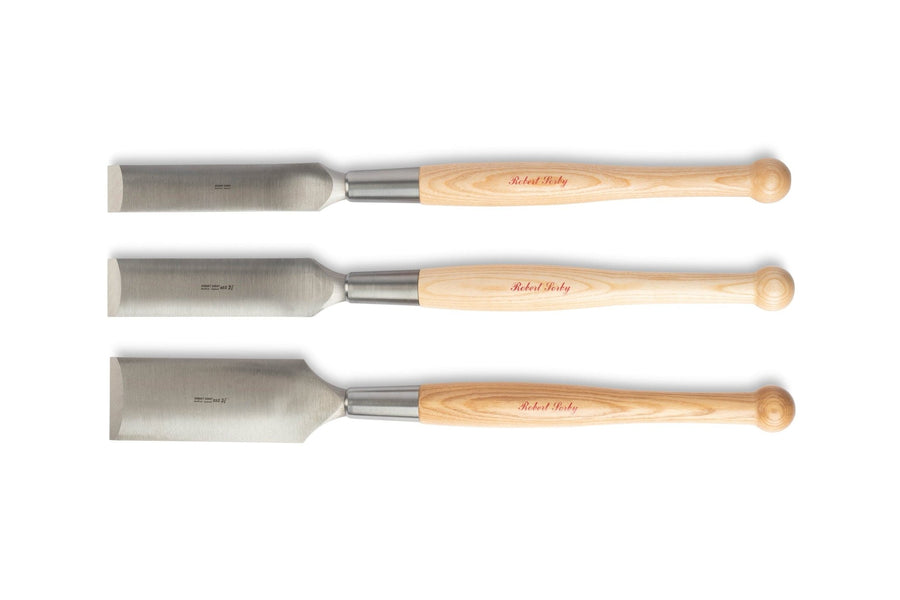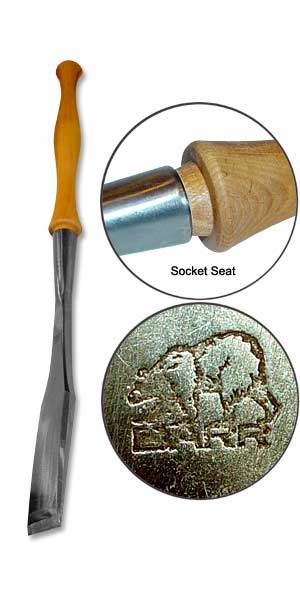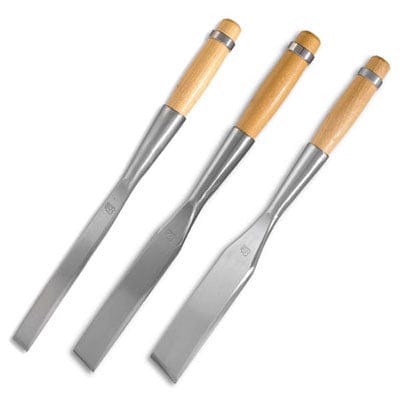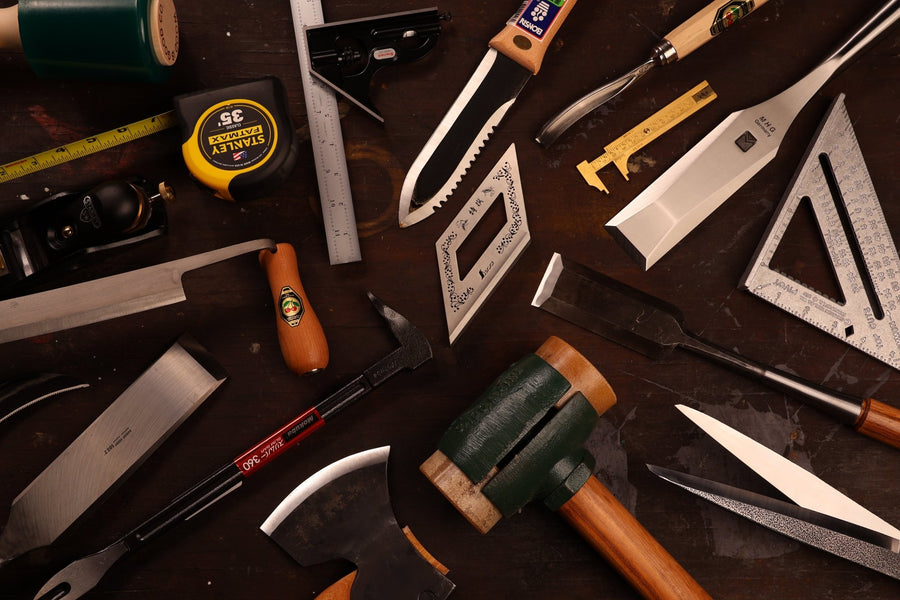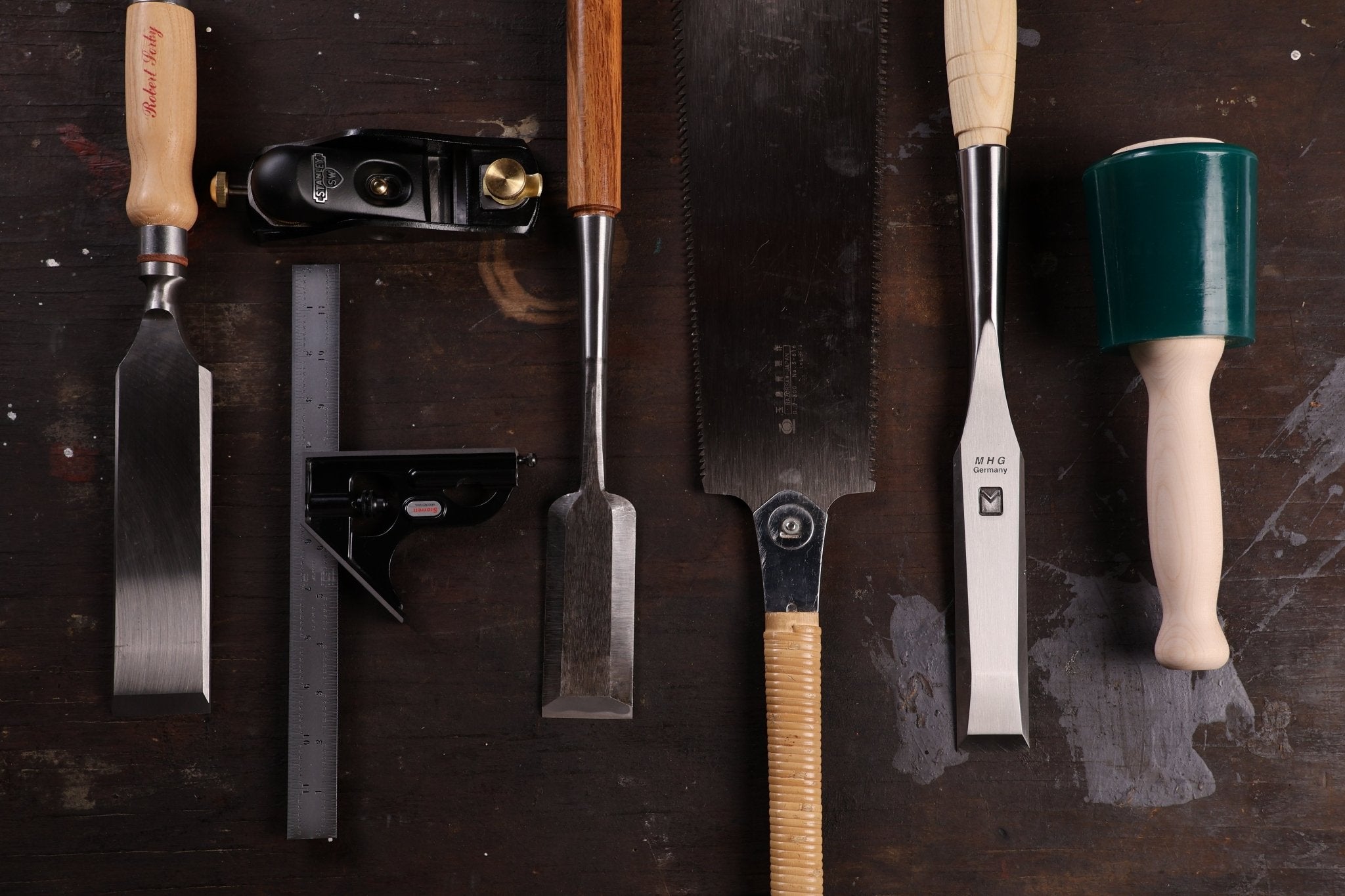
Walk into our shop in Woolwich, Maine, or click around on the website, and you will find both Japanese and Western chisels. Students ask us all the time: which style is better? The honest answer is that both will do the job and it is really up to you! There are obvious price differences and there are a few things to think about before buying. After 50 years of cutting timber frames with both, we have learned the ins and outs of both options and will present the facts and it will be up to you to choose.
The Key Differences
Japanese and Western timber framing chisels represent two distinct approaches to cutting clean, precise joints in wood.
Japanese chisels use a two-layer blade construction—hard steel for the cutting edge, laminated to softer iron for the body. The hard steel holds an edge longer. The back of the blade has a subtle hollow called the Ura (or urasuki), which makes sharpening faster since you are working with less surface area. They are also lighter than Western chisels.
Western chisels take the opposite approach. A single piece of high-carbon steel runs through the entire blade, with no Ura on the back. The steel is softer than what you find in a Japanese chisel, which makes it easier to sharpen a larger flat surface when the time comes. They are thicker, heavier, and built like tanks—designed to take a beating.
Japanese Timber Framing Chisels: Pros & Cons
Japanese chisels are lighter and have harder steel. That makes them slightly easier to handle, and the edge holds longer between sharpenings.
The catch: Japanese chisels seriously cannot be used to pry wood out of a mortise or pried off of a tenon. That is a mistake many beginners make, and it ends with chips in the beveled edge of an otherwise beautiful tool. They also tend to cost more, and there is a learning curve to sharpening them properly.
Western Timber Framing Chisels: Pros & Cons
Western chisels are more forgiving. The softer, single-piece steel means you can strike them hard with a mallet without worrying about chipping. They should not be used to pry either, but they can take it without ruining the tool if you slip up. The flip side is that the softer steel dulls faster, so you will be sharpening more often. Western chisels also tend to be more affordable, which makes them a solid entry point for students building their first kit.
Which Style is Right For You?
Honestly, it comes down to how you handle your tools. Are you a careful person? Are you not? It is okay if not! But you should be self-aware about that before you decide. Japanese chisels will punish a careless hand. Western chisels are more forgiving.
For chisels, we point you toward a Western chisel first—the more forgiving option while you are still learning the feel of timber framing.
For slicks, the call is really up to your style preference. Japanese slicks are lighter than Western slicks, and that is the main difference you will feel. Pick the one that suits how you like to work.
A note on building your kit: you do not need both styles. The only reason to add a Western chisel AND a Japanese chisel—or a Japanese slick AND a Western slick—is if you really like buying tools, or you are genuinely curious to feel the difference for yourself. Both are valid reasons! Just do not feel obligated to double up.
Our Favorite Timber Framing Chisels & Slicks
We only sell tools that we use and love, and we keep both Western and Japanese chisels and slicks in our own tool bags—whether we are working on personal projects or building on a job site.
The best chisel (and the best slick) is the one that feels best in your hands and matches how you work. Browse our selection of timber framing chisels and slicks, and if you are stuck between styles, give the shop a call at 207-442-7938. Real humans answer.