The Complete Woodworking Tool Kit is a woodworking hand tool kit for furniture and fine joinery: the tools in our Starter Woodworking Tool Kit plus three more Japanese saws (a dovetail saw, a flush cut saw and an azebiki), a set of MHG butt chisels and gouges, a Shinwa sliding T-bevel and a Japanese marking gauge, all with a Bucket Boss Gatemouth tote. It is the second of our three woodworking kits.
You save over $185 with this kit as opposed to buying the tools individually.
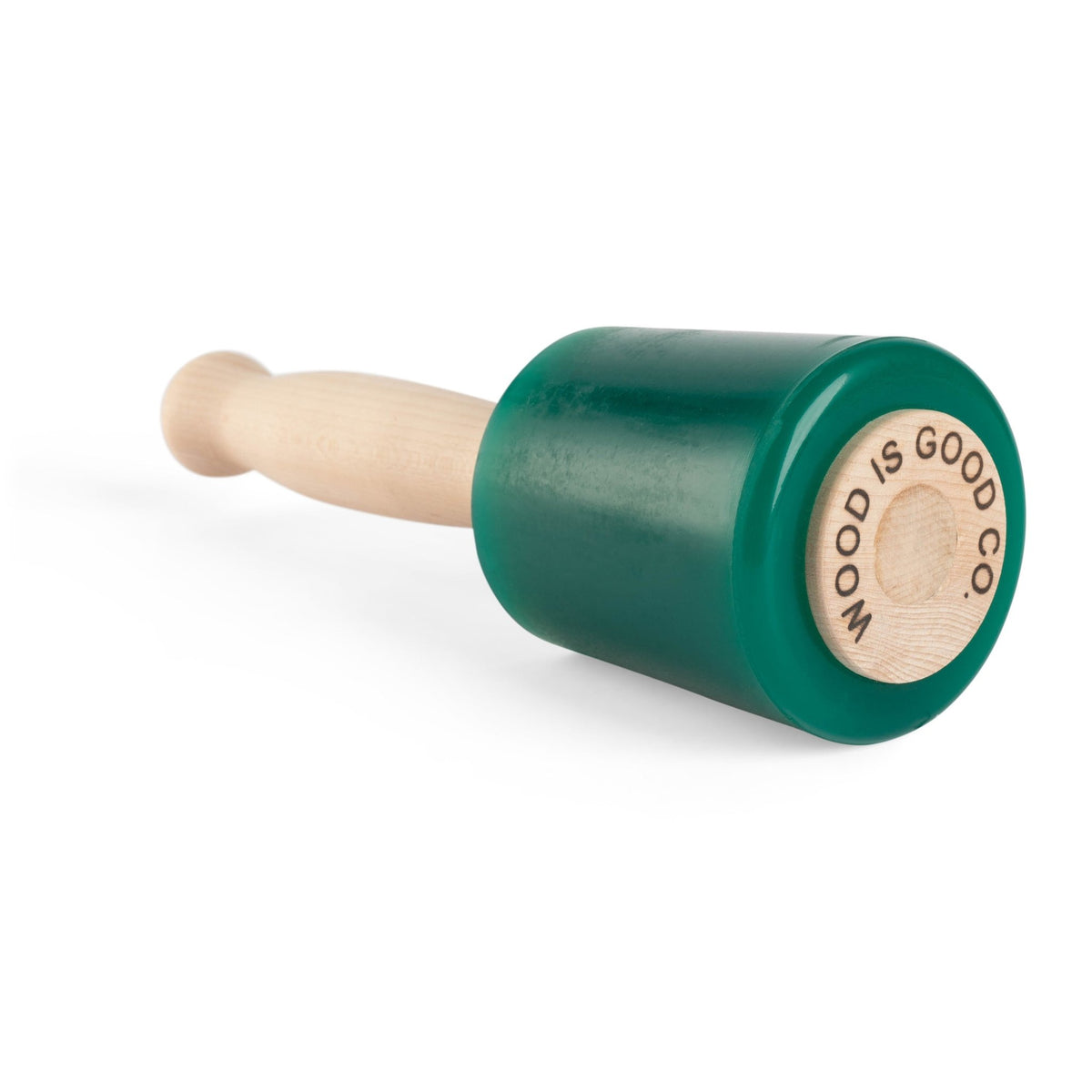
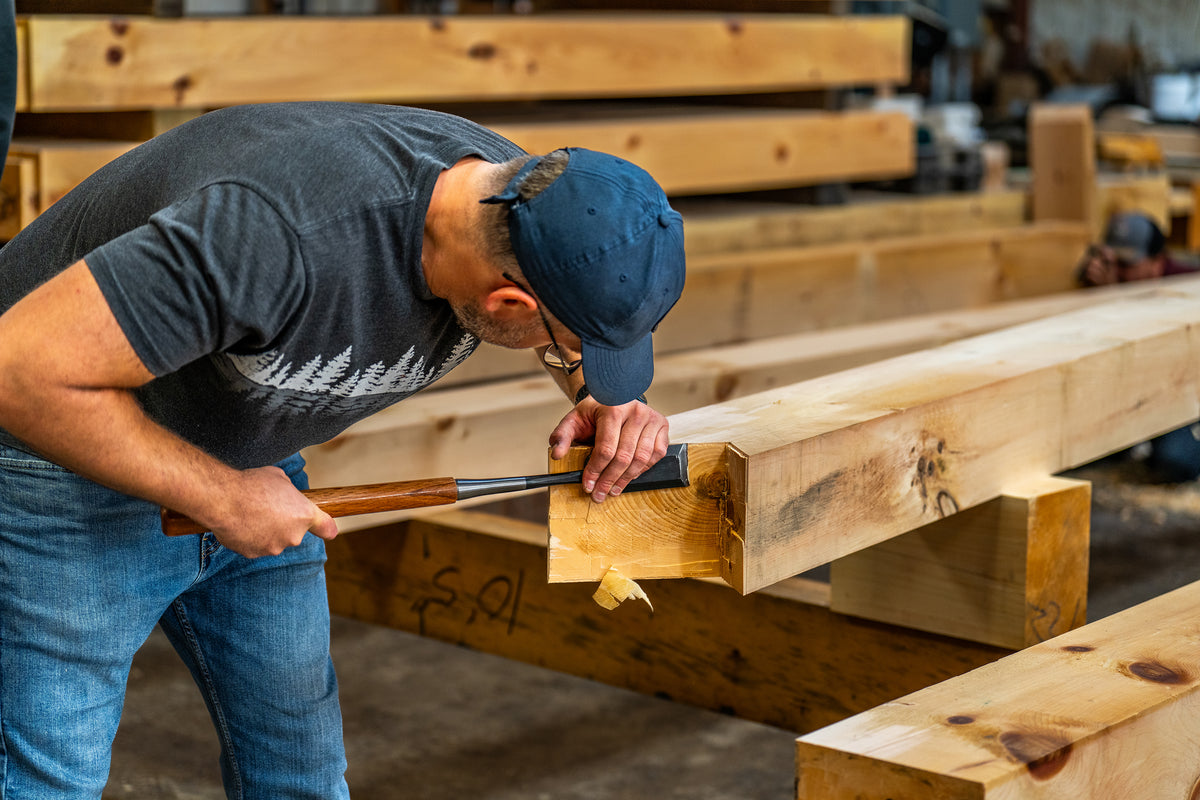
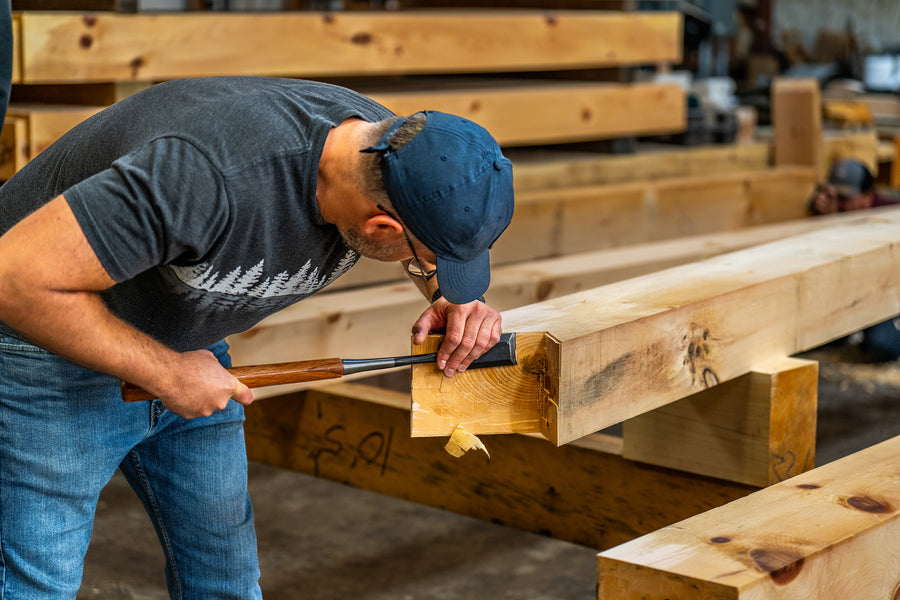
Six MHG Firmer Bench Chisels (6, 10, 12, 16, 20 and 25 mm) do the chopping and paring. They are German bench chisels, ground but deliberately left unpolished so the backs stay flat, with handles slightly flattened so they do not roll off the bench. The MHG Butt Chisels and Gouges Set adds three butt chisels (12, 16 and 20 mm) and two gouges (12 and 26 mm) in a wooden storage box. Their short blades give you control in tight spaces, and they are compression forged alloy steel, hardened to 61 HRC along the working length. The Wood Is Good Mallet (20 oz) drives them. Its thick molded urethane head on a hardwood handle absorbs shock, will not split a chisel handle and does not crack in freezing weather, and the 20 oz is the size for cabinet work.
Four Japanese saws do the cutting. The Gyokucho Ryoba Saw (210 mm) has rip teeth (8 TPI) on one edge and crosscut teeth (17 TPI) on the other of an 8-1/4 in blade, 0.45 mm thick. It cuts on the pull stroke, so the thin blade stays in tension and leaves a narrow kerf. The Gyokucho Komame Dovetail Saw (180 mm) is a dozuki, a Japanese back saw for dovetails and small, precise joinery, with a 0.3 mm blade, 26 TPI teeth and a long metal back that keeps the blade straight. It leaves a 0.46 mm kerf and cuts up to 1-7/8 in deep. The Gyokucho Flush Cutting Saw (No. 1151) trims plugs, dowels, pegs and through tenons level with the surface. Its 125 mm blade has no set and flexes, so it lies flat on the work and trims without scratching, with finer teeth (32 TPI) on one edge for hardwood and coarser teeth (21 TPI) on the other for softwood. The Kakuri Azebiki Saw (90 mm) starts a cut in the middle of a board, away from any edge, for grooves, sliding dovetails and openings. Its curved blade rocks into the surface to start the kerf, with crosscut teeth on one edge and rip teeth on the other.
The Melbourne Tool Company Low Angle Block Plane trims end grain, chamfers and fits parts. It is bevel up on a 12 degree bed, with a 35 mm M2 high speed steel blade, a fully adjustable mouth, a solid brass cap iron and a 1-3/4 x 6-1/2 in sole. Two Bahco Cabinet Scrapers (0.6 mm and 0.8 mm) smooth wood and level between finish coats; the thinner one flexes more and the thicker one is stiffer.
The Swanson Combination Square (6 in) checks square and 45 degrees, measures depth and works as a marking gauge, with a CNC-machined zinc head, a stainless steel blade etched in inches and millimeters, and a brass scriber. The Shinwa Japanese Sliding T-Bevel (10 in) transfers angles. Its lock screw sits at the rear of the stock, out of your grip, so the bevel lies flat, and it clamps the blade firmly so the angle you set is the angle you transfer. The Takakatsu Japanese Marking Gauge (one-beam kebiki) cuts with a small knife instead of a pin, slicing the wood fibers for a clean line even across the grain. Set the fence with the locking screw, then fine-tune it with the wedge. The Ikeuchi Double Bevel Japanese Marking Knife marks crisp lines for left- or right-handed users, with a 2-1/4 in laminated steel blade. A Shelter Tools Lutz Tape Measure (25 ft, 7/8 in blade) and three red Shelter Institute carpenter pencils finish the layout tools. The kit comes with a Bucket Boss Gatemouth Hard Tote: rigid foam walls keep tools upright and in view, with 8 pockets, 12 interior tool loops and a steel handle with a padded grip.
For a smaller set, see the Starter Woodworking Tool Kit. For more tools, step up to the Pro Woodworking Tool Kit.
MHG Messerschmidt is a family-owned chisel maker in Schmalkalden, Germany, a town known for toolmaking and cutlery since the Middle Ages.